
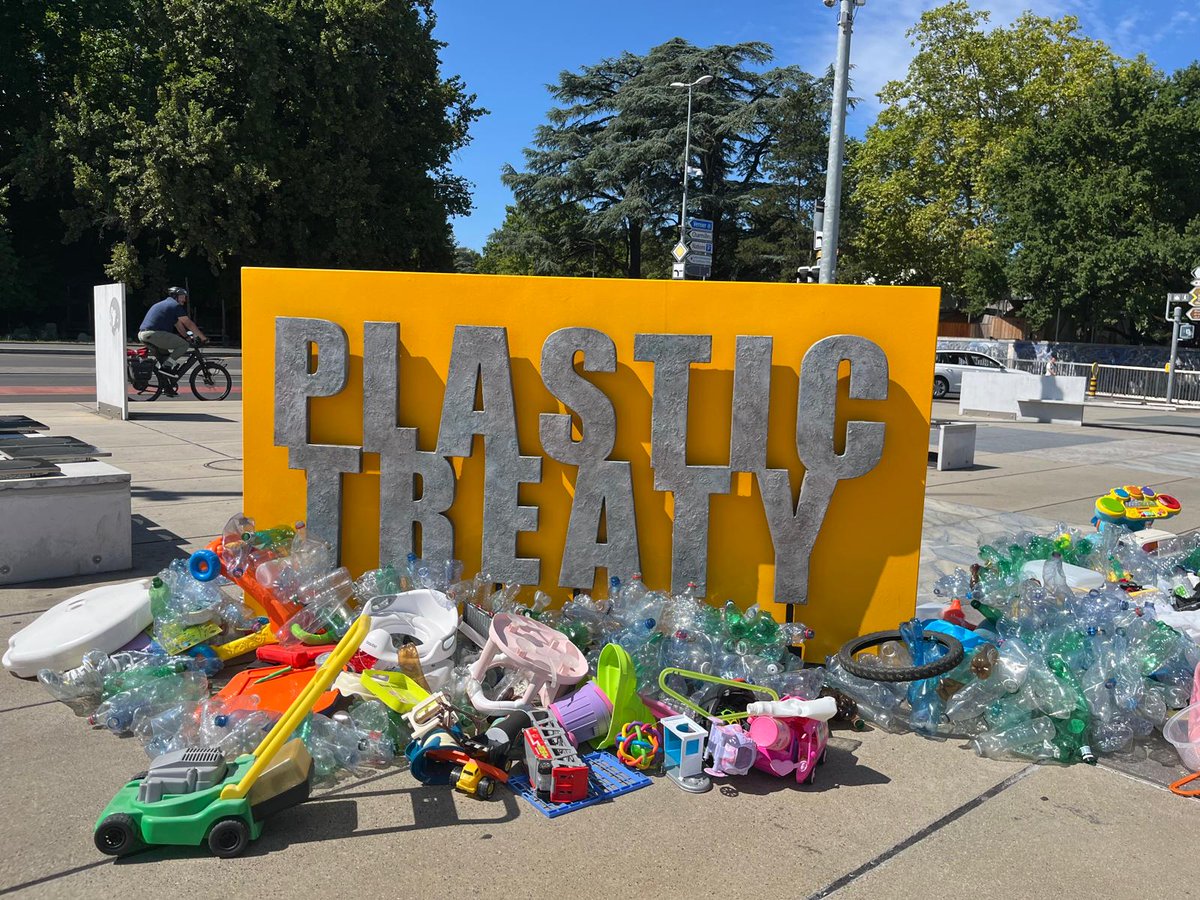
A guide to the Global Plastics Treaty
We all know that the world is facing a growing plastics crisis. Three years ago, nations started meeting regularly to discuss a plan for a future which protects people and nature from the harms of plastics. Many meetings later, the deadline for a finished treaty is upon us and countries are gathering one last time in Geneva to make this happen.
It has the potential to be one of the most important environmental agreements in history.
Unfortunately, this goal is by no means guaranteed. A handful of states and corporate powers which are most embedded in the plastics supply chains are set on derailing and watering down the treaty. As negotiations begin in Geneva, this blog post explores some of the players and issues which will be key to agreeing a meaningful Global Plastics Treaty which can end plastic pollution for good.
Who’s involved?
The High Ambition Coalition: The High Ambition Coalition is group of over 100 countries, including the UK, that is pushing for a strong treaty. This group agrees that the treaty should include a target to reduce plastic production, bans on the most harmful chemicals in plastic and financing to help the world’s poorest countries cope with the plastic crisis.
The “like-minded” block: Countries which are invested in plastics production including petrochemical states, such as Saudi Arabia and Russia, are holding the rest of the world to ransom. It’s unclear where America stands – perhaps it can be persuaded that being part of a successful global treaty can be an example of the power that its leadership can bring in troubled times.
Civil society groups: Friends of the Earth International and other civil society groups, including those representing community groups, scientists and waste pickers, are official observers throughout the treaty process. We remind the country representatives what is at stake and support them to present clear and science-based cases. We also work together to draw attention to the Global Plastics Treaty and call out greenwashing.
The treaty’s chair: A key player in breaking the deadlock could be Ambassador Luis Vayas Valdivieso from Ecuador, who will lead the negotiations as its chair. Historically, successful environmental treaties, such as the Kyoto Protocol, have usually had a chair who is willing to push the negotiations in favour of a just and sustainable solution. If Ambassador Valdivieso is willing to call out those blocking the process and push for change, this could tip the balance in favour of a strong treaty.
The plastic lobbyists: Corporate groups have been allowed into the negotiations from the start, and they have proven a powerful voice in negotiations. David Azoulay, a senior attorney at the Center for International Environmental Law (Ciel) says it is concerning when “the people who created the problems, benefited from the problem, have lied about the problem and their responsibility about it for years and decades” are considered trustworthy partners to solve those problems.
What are some of the key issues being discussed?
Reduction vs recycling: Plastic production has been growing since its invention in 1950s and levels are predicted to triple by 2060 compared to toady’s levels. The harms of plastic pollution cannot be addressed if this happens. Without a commitment to reducing plastic, a Global Plastics Treaty is garbage.
One way in which pro-plastic groups have sought to undermine the treaty has been by suggesting that rather than limiting plastic production, it is more important to encourage recycling. But recycling does not address the underlying problem: that there is too much plastic in the first place.
Financial mechanisms: The harms of plastic are not felt equally – global north countries dump their plastic waste on global south countries and most of the world’s plastic collected for recycling is found by waste pickers who are poorly paid for their work. Many agree that without comprehensive promises of funding from rich countries, the treaty will fail to address these inequalities properly.
However, so far it has been difficult to pin down exactly how much money is needed and how to manage its distribution to those that need it most. These issues must be on the table at Geneva.
Keeping health at the heart of the treaty: One area that civil society groups have been pushing hard on is embedding the idea that plastic pollution is just as much a health crisis as it is an environmental one.
The current version of the treaty includes a short list of the most harmful plastics and plastic additives which should be banned globally, such as plastics which include lead and other heavy metals that are used in food packaging and children’s toys.
Some groups argue that the treaty should not go into such details as banning specific chemicals. However, if these measures are left out, it will take 5-10 years longer for bans to begin. That’s too long to wait when these toxic chemicals are causing real harm now.
So, there is much at stake at the talks in Geneva and a difficult balance to be negotiated. On the one hand, the majority of the world want a treaty which protects people and nature by setting limits plastic production. On the other, a treaty without those states most embedded in the plastics supply chain is fatally flawed. And that is what these talks are about: can a path to consensus be found which creates a meaningful commitment to a future free from plastic pollution?