
Standing with workers to demand for a fast and fair transition
This year, affected workers and communities made it clear that they are unwilling to put up with the impacts of unjust transitions. In some places this has translated into powerful campaigning and action, but there has also been an increasingly polarised debate over what the future of the oil and gas industry and the North Sea should look like.
We’ve continued to work alongside our movement and trade union allies to organise for a truly just transition, and this fight is by no means over.
Worker-climate coalition action
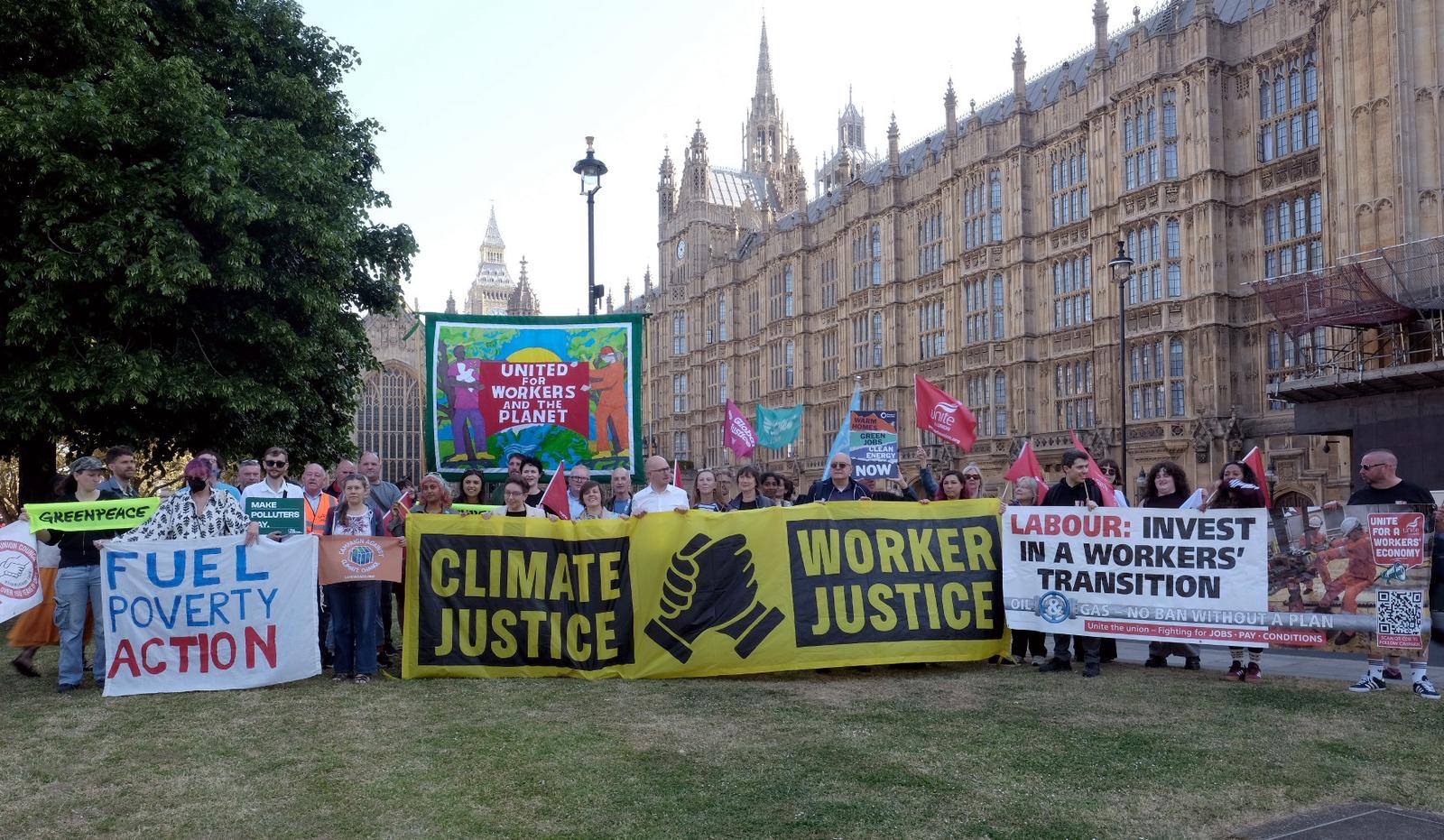
In May of this year, trade unions and climate groups rallied together outside the UK parliament to demand an emergency funding package for North Sea oil and gas workers.

We wanted the UK Government to put their money where their mouth is on the transition and properly invest where it is so desperately needed. This included investing to develop permanent, local jobs in public and community owned wind manufacturing, upgrading and investing in the ports needed to make this happen. We also called for a dedicated training fund for oil and gas workers, including time off to retrain.
We were proud to once again stand shoulder to shoulder with trade unions calling for these demands. Whilst the results of the spending review leave a lot to be desired, we’re making plans to build on this work in 2026, particularly on the road to the Holyrood elections this coming May.
Government transition policy: piecemeal and inadequate
Both governments have announced meagre policy announcements in relation to the energy transition. The UK Government’s ‘Future of the North Sea’ plan lacks the necessary detail and industrial policy that would tangibly result in job creation or direct worker support. Whilst the proposed advisory board brings unions more directly into the room, the ambition must be rapidly scaled up.

The Scottish Government released its draft Climate Change Plan in November this year. The plan sets out key just transition indicators through which the government can measure the effectiveness of each of the plan’s policies in achieving just transition outcomes. In a similar vein, the government renewed the Just Transition Commission for another term.
Yet, the Climate Change Plan, alongside the few just transition plans that haven’t been canned this year, will likely struggle to meet its own standards, or the recent recommendations of the commission. The Scottish Government’s rhetoric does not match the reality for workers and communities on the ground.
Grangemouth transition failures
Nowhere has this been felt more acutely than Grangemouth. Whilst promises have been made around a jobs guarantee for workers previously employed at the oil refinery, and new funding conditionalities have been proposed, it has often felt too little too late for the workers that were served redundancy notices in the spring.
In the last week, both governments have committed funding to support continue production at the nearby ethylene plant. Yet the question must be asked if either party have learned from giving Ineos huge public handouts when they have previously left their workforce on the scrapheap with no clear transition plans.
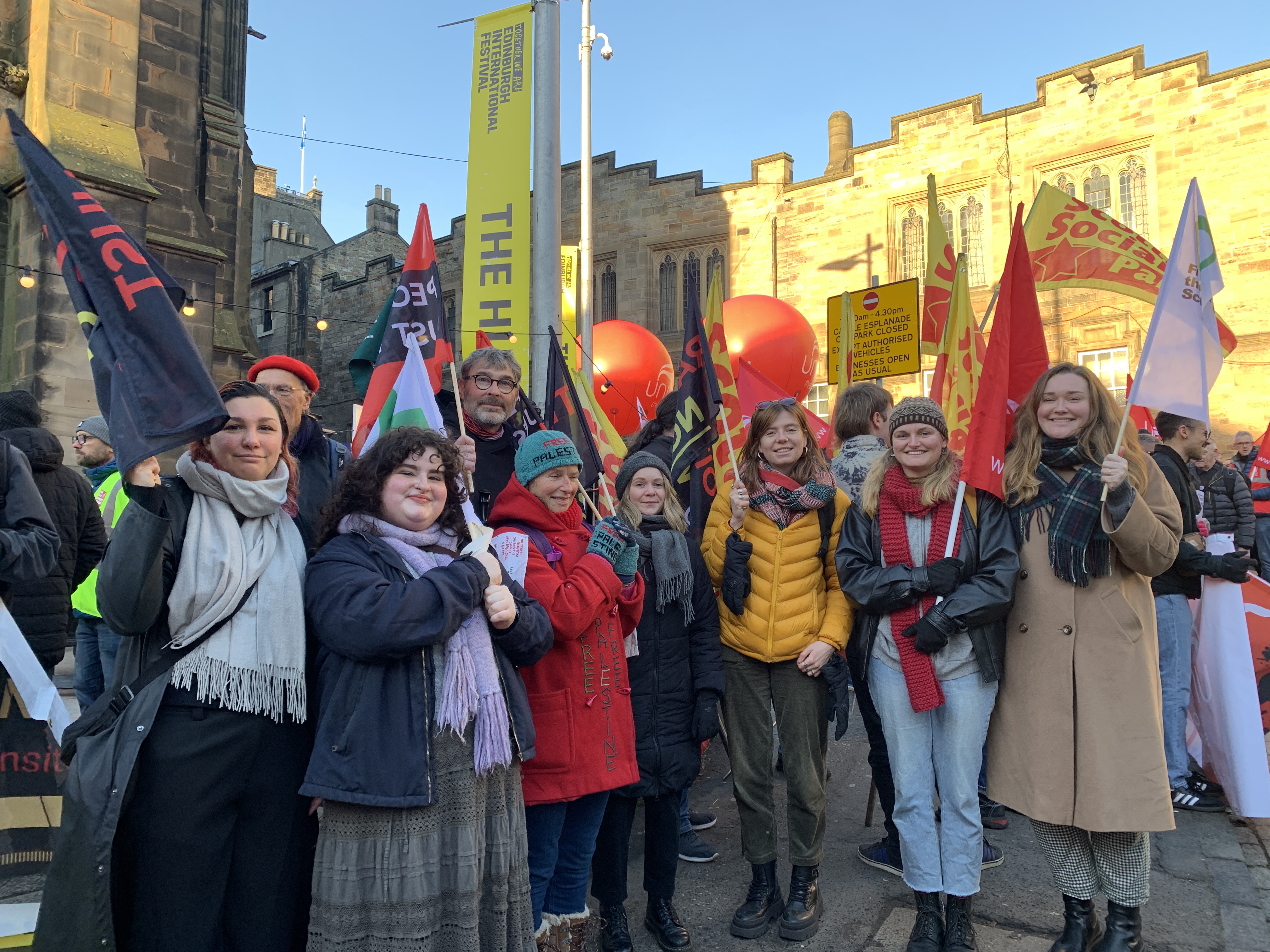
In a future where we need to drastically reduce plastics production, it will be workers and the Grangemouth community, rather than billionaire Jim Ratcliffe, who suffer the effects of the lack of long-term planning. As a litmus test of the transition, it continues to be a damning indictment on both governments’ failure to deliver a fast and fair transition.
Mossmorran – repeating the same mistakes
Distressingly, the lack of lessons learned at Grangemouth have had a devastating impact for the workforce and community around Mossmorran. ExxonMobil announced they were closing the site, with doors set to shut in February 2026. The Scottish Government had previously committed to a just transition plan for the plant, yet once again this has gone missing in action.
In an all too familiar story for the Scottish Government, private industry have been enabled to dictate the pace and terms of the transition, blaming net zero policies in a brazen attempt to cover for their own profiteering. Instead of a careful, worker-led transition, we’re likely to see another set of disillusioned fossil fuel workers, let down by their employer and the government – just before the Christmas period.
Workers demand “Transition on our terms”
In the face of government inaction, workers have told them exactly what’s needed. We endorsed Platform’s report “Transition on our terms” which sets out how bleak the current picture of the oil and gas industry is – with over 100 workers surveyed, nearly a quarter are looking to leave and only 2 in 10 reporting that they were satisfied with their job.
Instead, workers want both governments to ramp up action to create good, unionised jobs in renewables, support workers to transition and ensure that the profits from the transition are returned to workers and communities.
The market-led and profit driven transition we’re currently seeing is not fair and not just. The alternative is clear – we need public investment and public ownership as key element of energy transition. In the face of unjust transitions happening across Scotland, at the hands of ExxonMobil to Jim Radcliffe, politicians must listen to oil workers not oil industry PR men.
What’s next?
With this in mind, it is more important than ever for the climate movement and the labour movement to pressure the government for bold transformative change. The government cannot be allowed to let the energy transition to be led by private greed.
We have the solutions, built by those with the expertise and experience of working in the industry. We must take advantage of this current opportunity to create a better future, for those working in the oil and gas industry and all across Scotland. We are committed to always standing shoulder to shoulder with unions, workers and communities, to push for transformative action and for a fast fair transition