
What comes next for the new Scottish Parliament?
New and returning MSPs travel to Edinburgh this week to take up their seats in the Scottish Parliament following last Thursday’s election, where the political landscape now looks very different.
The SNP will return as the largest party in Holyrood again, although they do so with fewer seats than before – 58 MSPs compared to 64 after the 2021 election – and a lower share of the votes overall.
In a first for the Scottish Parliament, there was a tie for the second biggest party with both Scottish Labour and Reform UK having 17 MSPs. Scottish Greens have more than doubled their seats to 15 MSPs, while Conservatives have 12 MSPs and Lib Dems 10 MSPs. Parties will need to work together to secure the majority of 65 or more needed to pass any vote.
Overall, half of the MSPs (64 out of 129) heading into the Scottish Parliament are new to the job this week.
So, what does this mean for our work and climate action in the Scottish Parliament?
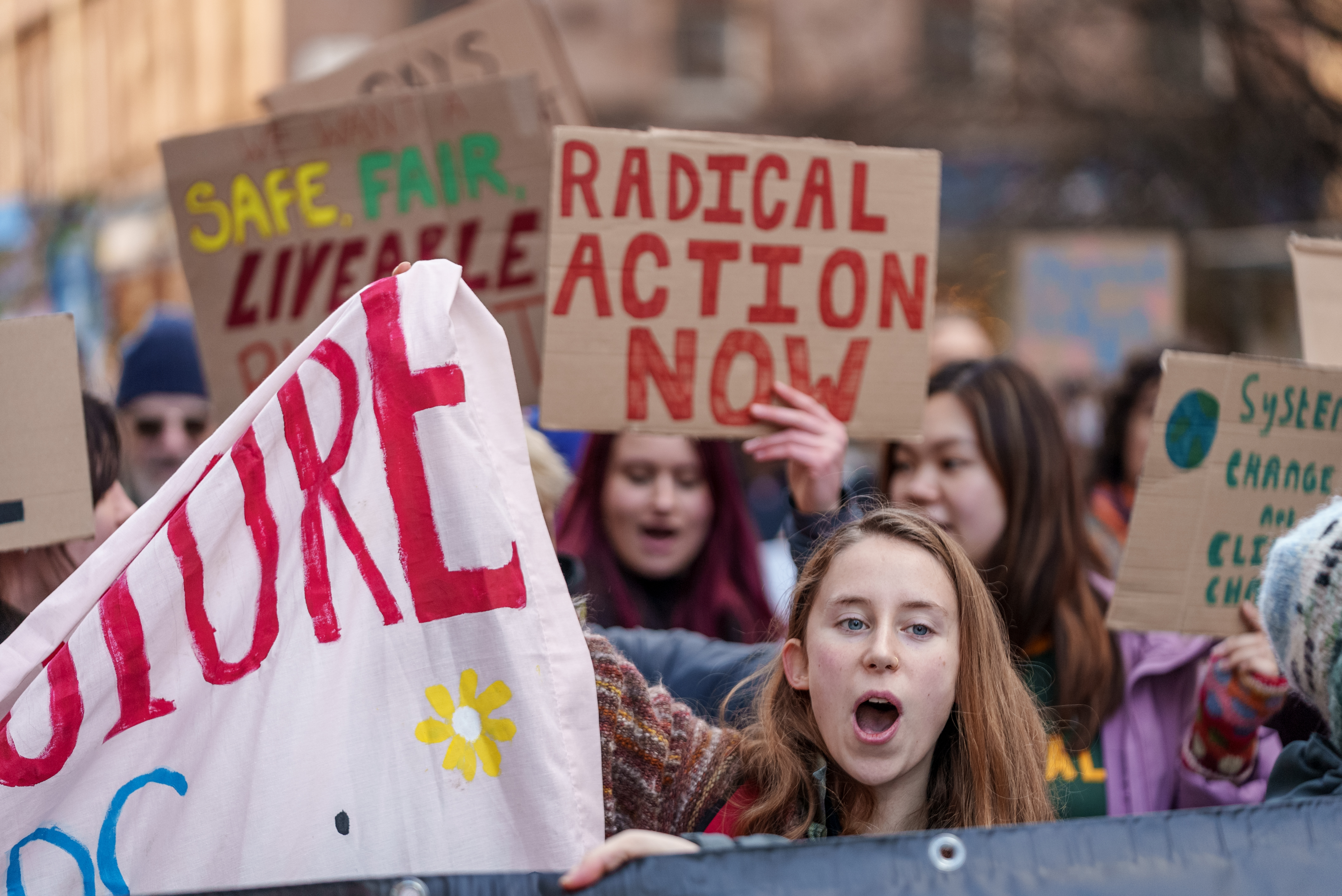
Reform UK enter the Scottish Parliament for the first time, with their policies to scrap net-zero targets and continue drilling the North Sea. This climate denial in parliament will feel disheartening for many of us, following as it does the rollback on climate promises from the Scottish Government. But we must remember that the vast majority of MSPs were elected on manifestos that supported climate action – we must not let them be complacent.
With so many new MSPs and loud voices against climate action, now is not the time to despair. It’s the time to come together, to get organised and show the new MSPs our vision for a better world and crucially, to work together for change.
This Scottish Government and set of MSPs will be in the parliament for five years – the critical time for finalising Scotland’s transition away from fossil fuels.
We will be campaigning for the new Scottish Government and Parliament to deliver better bus services that will reduce transport emissions while connecting communities; well-insulated homes that lower people’s heating bills and an energy system that is run in the interest of its workers and the wider public.
Climate was not front and centre for many parties in their campaigning, reflecting people’s primary concern about the cost-of-living crisis. Our job now is to continue to show how the cost-of living crisis and the climate crisis are linked – how energy, food and transport bills are being pushed up by profiteering companies – and how the solutions to both lie in climate action that improves people’s lives.
Election promises mean that Scotland could soon have caps on energy prices, bus fares, food prices and rent. This makes clear that the time has come for radical, system level interventions that challenge the power of big business, rather than sticking plaster solutions.
The necessary move away from fossil fuels to renewables is an opportunity to put power back into public hands. Instead of continuing to allow energy companies to make obscene profits, a new renewable energy system could be built in Scotland, with the proceeds being reinvested back into the communities where it is located. Whereas the research we published just before the election showed that Reform’s ideas for cuts to climate targets would lead to half a million job losses across the country in just three years.
The wealthiest and the big polluters who are profiting from causing climate breakdown and rampant inequality should be the ones paying for the transition away from oil. The problems that people in Scotland are facing are caused by greedy business and billionaires, not by people who are marginalised and seeking safety.
Building people power
Friends of the Earth Scotland will be working to bring people together to campaign for the changes that will protect our environment and improve lives. We are rebuilding local groups across Scotland, putting our energy in campaigns to improve bus services, reduce waste and treat workers fairly as we move away from oil and gas.
Many of the challenges we face as a society are undoubtedly big. But the way we can challenge them is by getting organised in our neighbourhoods and communities. Building people power and connections like these also defends our communities against those trying to divide us.
If you’d like to help shape our efforts to make sure the next Scottish Parliament acts strongly for the climate and for all of our futures, join Friends of the Earth Scotland as a member today, and get involved in our campaigns and local groups. We are also hosting post-election events in Glasgow, Edinburgh and online on the 27th and 28th May.
Change begins with us.
Post election events
National Meeting – Edinburgh & online
With XR Edinburgh and Edinburgh Climate Coalition
Wednesday 27th May, 6:30 – 8:30pm
Augustine United Church, George IV Bridge
Glasgow post-election meeting
With Parents for Future and Fuel Poverty Action
Thursday 28th May 6:30 – 8:30pm
The Boardwalk, Brunswick Street