
The secondhand clothing conundrum
Donating clothes is a great way of supporting local charities and making sure old clothes are reused. But both Scottish charity shops and international groups are sounding the alarm that this model is failing. Cheap, poor-quality clothes are flooding the market. With costs soaring for everyone except the companies churning out fast fashion, it’s time to change the way second-hand clothes are managed for good.
Rising costs for charities
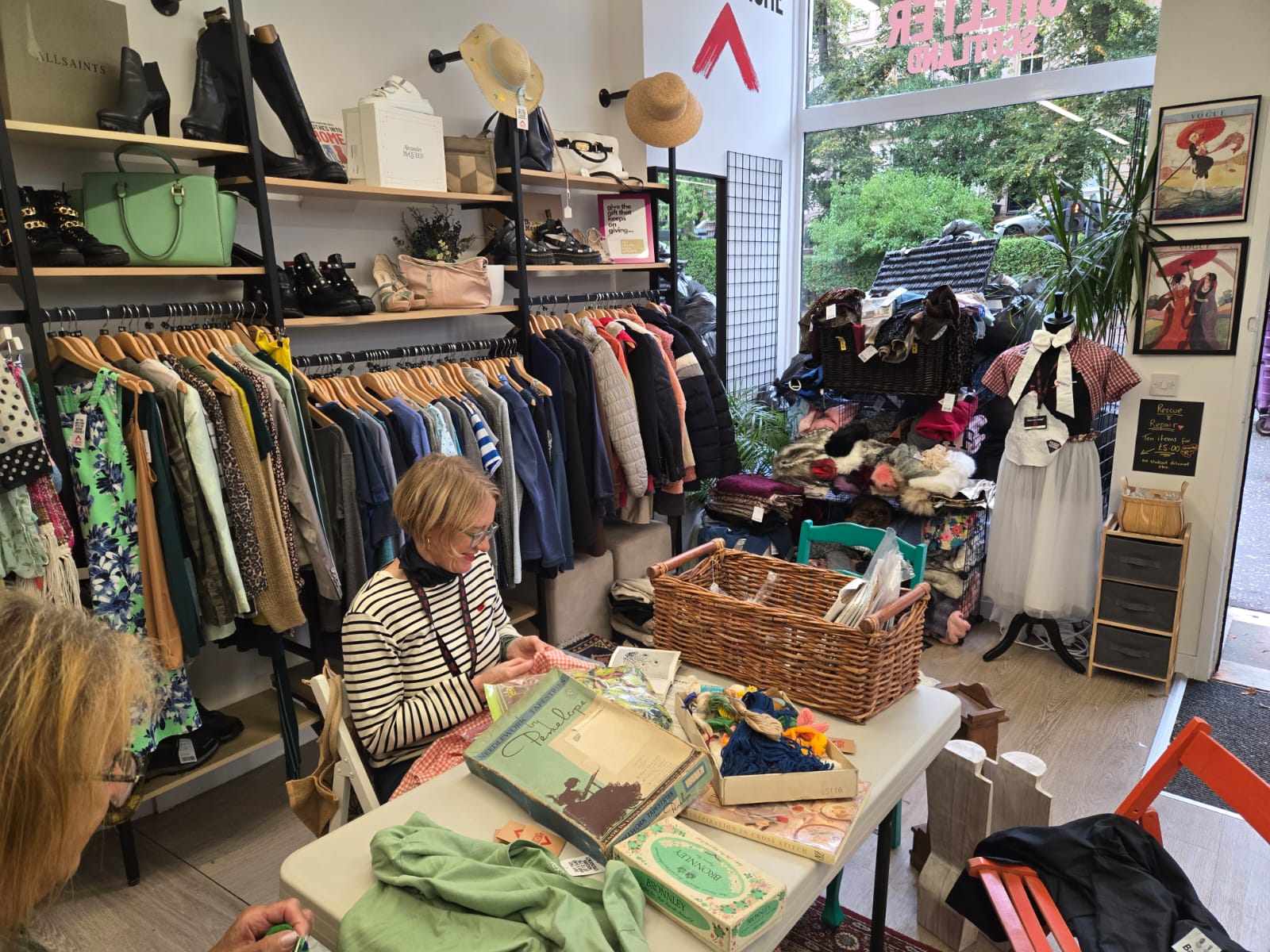
In Glasgow, charity shops like Shelter rely on doorstep donations to add to their stock. Once donations have been dropped off, they are sorted by volunteers. Where possible, the clothes are resold and the profits go towards supporting the charity’s good causes.
Everything else is picked up by waste management operators for reuse overseas and recycling. As much as 98% of clothing donations in Scotland are reused or recycled.
The waste management operators pay charities for the bags of old clothes, and this money helps charities cover their costs. However, because of the increasing amount of poor quality clothing waste, waste management businesses are paying less and less. Over the past year, the price has dropped about 75% and is down to 5p per bag. For many charity shops in Glasgow this means the process of managing clothing that they cannot sell in-store is becoming a major challenge. Charity shops across Scotland have reported similar problems.
Donation dumping seen from space
More and more clothing from the UK and other rich countries is being exported to the world’s poorest nations. The huge volumes and low quality of exported clothing mean that much of this goes unused. The mountain of discarded clothes in the Atacama Desert in Chile can now be seen from space.
Known as ‘donation dumping’, these clothes often end up in landfill and cause major problems for local people. The dumped clothing leads to polluted waterways and hazardous working conditions. When clothing is exported in this way, it is a form of waste colonialism and part of a harmful system of overconsumption. In a recent series of meetings with Scottish Government officials, global south representatives from Africa, Asia and South America all warned that this problem is getting worse.
‘Fast’ fashion means exploitation
Whilst both charities in Scotland and people internationally are struggling with the same problem, there is one group doing very well out of the current model. Corporations and supermarkets make huge profits on the new clothes they sell. The global fashion industry revenue was $1.2 trillion in 2022, and it takes 28 minutes for a CEO to earn what a garment worker makes in a year. With 10% of global carbon emissions connected to the clothing industry, it’s a significant contributor to climate breakdown too.
Companies that sell new clothes aren’t doing enough to manage the waste from their products. Instead, they rely on charity shops and waste pickers in poor nations to clean up their mess. This system isn’t fair and it’s not sustainable.
A better future is possible
Friends of the Earth Scotland are calling on the Scottish Government to change this. The Scottish circular economy strategy (which aims to change the way materials and products, like clothing, are used) is an opportunity to revolutionise our clothing system.
If we can move to a system based on fewer, high-quality clothes, it could help charity shops in Scotland prosper and end donation dumping overseas. Consumers could benefit too, if our clothes kept us warmer and lasted longer. These changes are possible, but government must stand up to greedy companies to make it happen.
Credit: much of this article is based on discussions with FOES member, Pam Yule.