
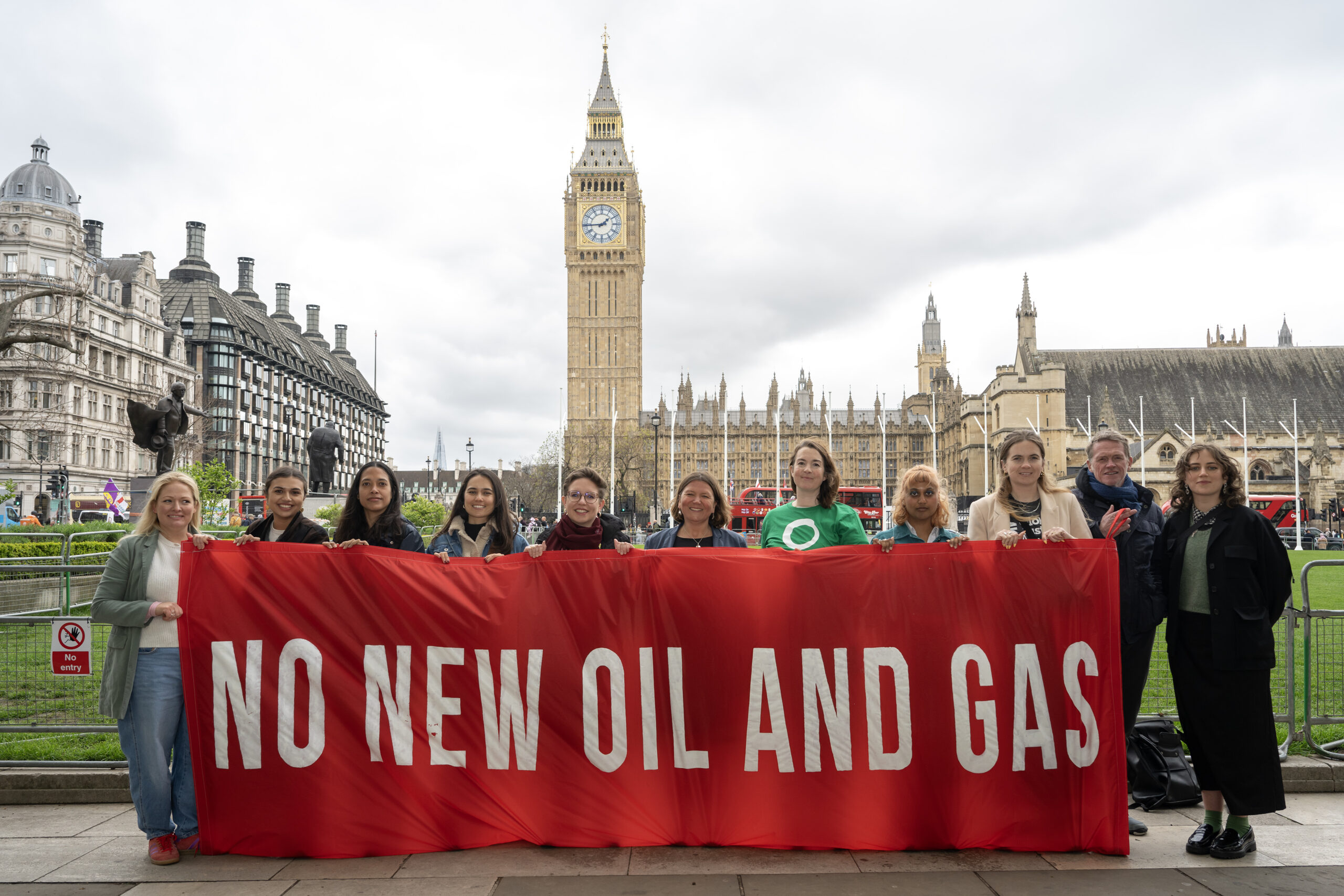
Breakthrough in fight against new oil and gas
2025 started off on a high with the approval of the Rosebank oil field being declared unlawful. This was a fantastic legal victory that was the latest chapter in a huge people-powered campaign against the biggest undeveloped oil field in the North Sea.
The Scottish Court of Session agreed that the significant emissions caused by the burning of Rosebank and Jackdaw field’s fossil fuels should have been taken into consideration during its approval by the previous UK Government.
This decision effectively re-started the entire permitting process for both these fields, giving us the opportunity to continue to campaign against new oil throughout the past 12 months and further delaying this climate-wrecking project.
Fossil fuels driving up energy bills again
In February, it was announced that the energy price cap would rise by over £100 again, driven largely by the costs of fossil fuels. The cost of fossil fuels is determined by the international energy markets, so wars, global politics or natural disasters can all push up the price of household bills.
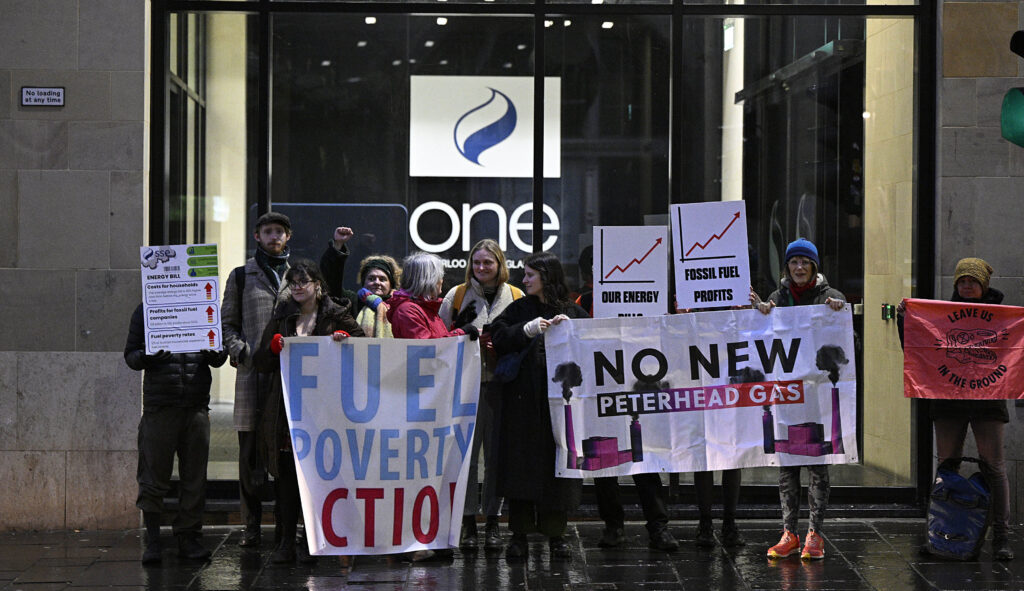
Together with fuel poverty activists, we organised a protest outside the offices of energy company SSE in Glasgow to mark the rise in bills. Despite marketing themselves as a company focused on renewables/the energy transition, it operates 14 fossil fuel power plants in the UK and Ireland and generates the majority of its energy output from burning gas.
We revealed just how poor their ‘transition’ plans are, in a report and tracker published collaboratively with Beyond Fossil Fuels. SSE want to build a new gas burning power station at Peterhead which risks locking households into dependence on these same volatile gas markets for decades to come.
1 million people demand a just transition
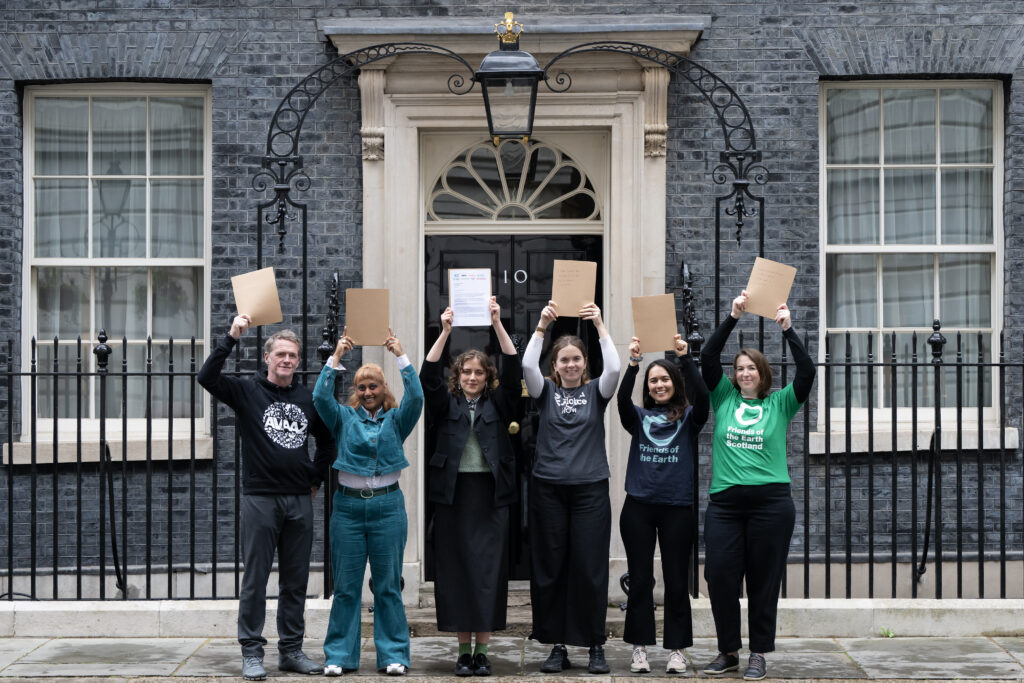
In Spring, over one million people signed a petition calling on the UK Government to deliver a fair and fast transition away from fossil fuels. Alongside a diverse range of organisations from across the climate movement, including Greenpeace, Global Justice Now, and Friends of the Earth, England, Wales and Northern Ireland, our Head of Campaigns Caroline Rance handed in the petition directly to 10 Downing Street.
People understand that oil and gas workers must be at the heart of building a new energy system powered by renewable energy and run in the public interest.
Political backsliding on oil and gas
Despite the clear public appetite for the transition, many politicians went backwards on their climate commitments this year. The Conservative Party have adopted a Trump-like ‘drill at all costs’ approach, ignoring demands from climate scientists to phase out fossil fuels and undermining the transition to renewable energy.
These politicians are neglecting to tell the public that any oil drilled from the North Sea is owned by the companies and will be sold to the highest bidder on the international market. Increasing extraction will do nothing to reduce the household bills which have been held hostage by these same greedy energy companies for years now, in a country where one third of households live in fuel poverty.
Jobs in oil and gas have halved since 2014 despite hundreds of licenses issued during that time. This year has reinforced the need to supporting energy workers through credible, funded transition pathways into well paid, secure renewables jobs – not chasing the dregs of a mature North Sea basin.
Scottish Government on the fence
The Scottish Government’s position on the fence about new oil has becoming increasingly untenable throughout the past year. The Government’s Energy Strategy and Just Transition Plan has seemingly been abandoned and it’s unclear whether that document’s presumption against new oil drilling has been abandoned as well.
Scottish Ministers say its opening new oil fields is Westminster’s decision as a reserved power and that they couldn’t possibly comment, yet the same Ministers can’t stop themselves for calling for lower taxes on oil company profits – another reserved power. The excessive profits made by oil companies – some £125 billion since 2020 in the UK – should be going to support vital services and repair some of the harm caused to communities and families by the same energy bills in recent years.

It’s clear that profits of these firms – that which hasn’t gone to shareholders or bonuses for bosses – is being spent on a huge lobbying operation targeting politicians. One investigation revealed over 300 meetings between oil companies and Scottish Ministers since COP26 was held in Glasgow in 2021.
There was a chance for the public to speak out against the Rosebank project when its developers Equinor produced a new Environmental Statement as required by the legal judgement back in January. It showed that this one field would be responsible for at least 250 million tonnes of carbon. Despite this, First Minister John Swinney couldn’t bring himself to join former leaders in Nicola Sturgeon and Humza Yousaf and reject the Rosebank oil field.
Landmark ban on new oil fields
The year ended on a high note with the UK Government confirming that it will not allow companies to explore for new oil in the North Sea. This was a landmark achievement after years of campaigning from across civil society. It has been achieved through putting pressure on politicians through meetings, petitions, activism organising in our communities, people taking direct action and the million other ways we have collectively spoken out against new fossil fuels. You should be proud of the role you have played in making this happen.
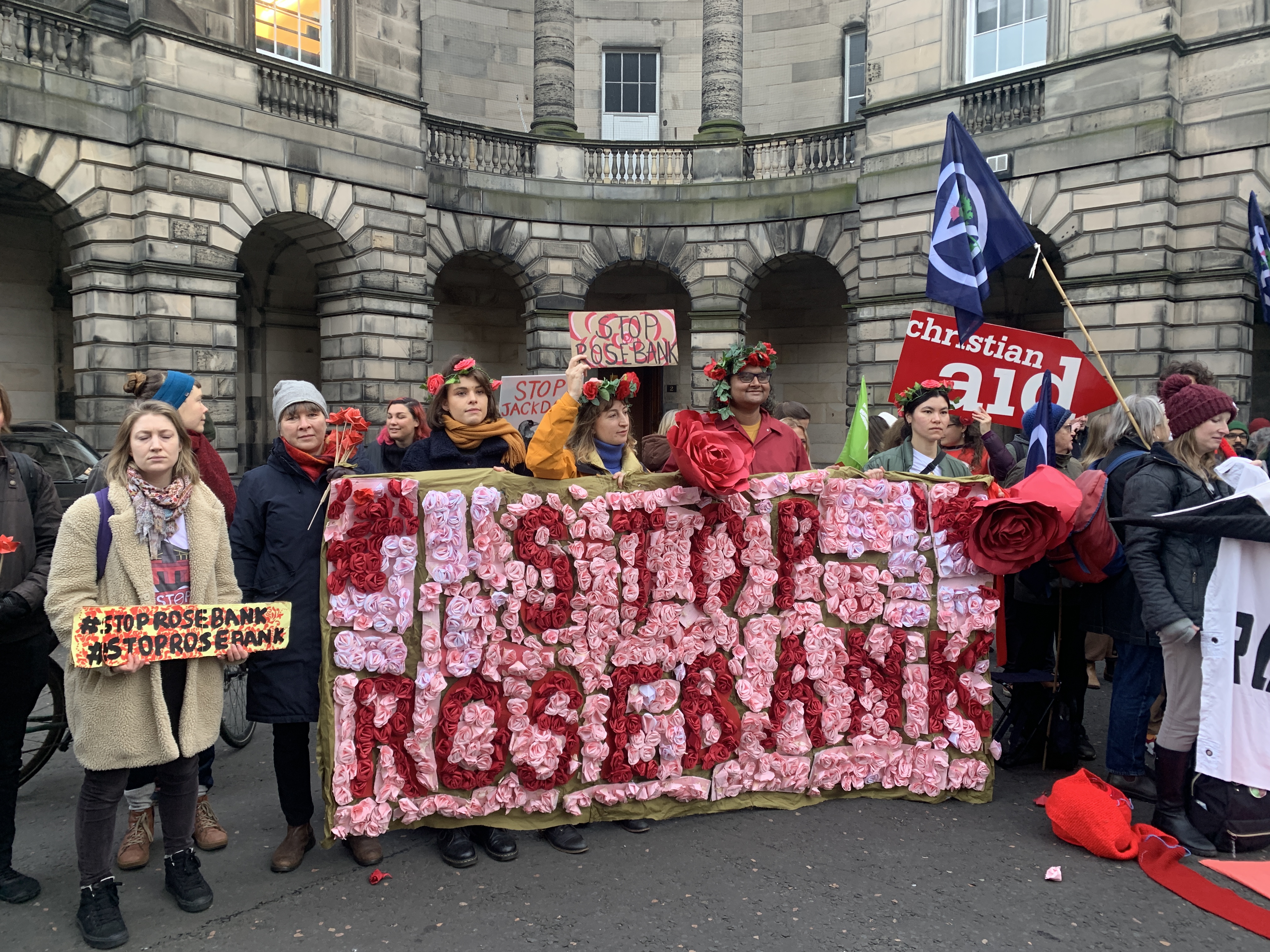
The final decision was not perfect, and Ministers caved to lobbyists by introducing loopholes that would allowing new drilling in existing fields. Ministers remained silent on the proposals to drill in the Rosebank and Cambo fields because these applications were already in the system before this decision was made. We will need to sustain this energy and pressure to make sure that those huge fields are stopped once and for all.
In 2026 we will continue this fight to end fossil fuels and instead deliver a fair and fast transition that supports the workers and communities most impacted. This means bringing people around the table to listen to their needs and their experiences, and involving them in the very making of these plans.
We will continue to demand a transition plan that includes job-creating investments in publicly owned wind manufacturing, funding for upgrading our ports, and dedicated training support for offshore oil and gas workers.