
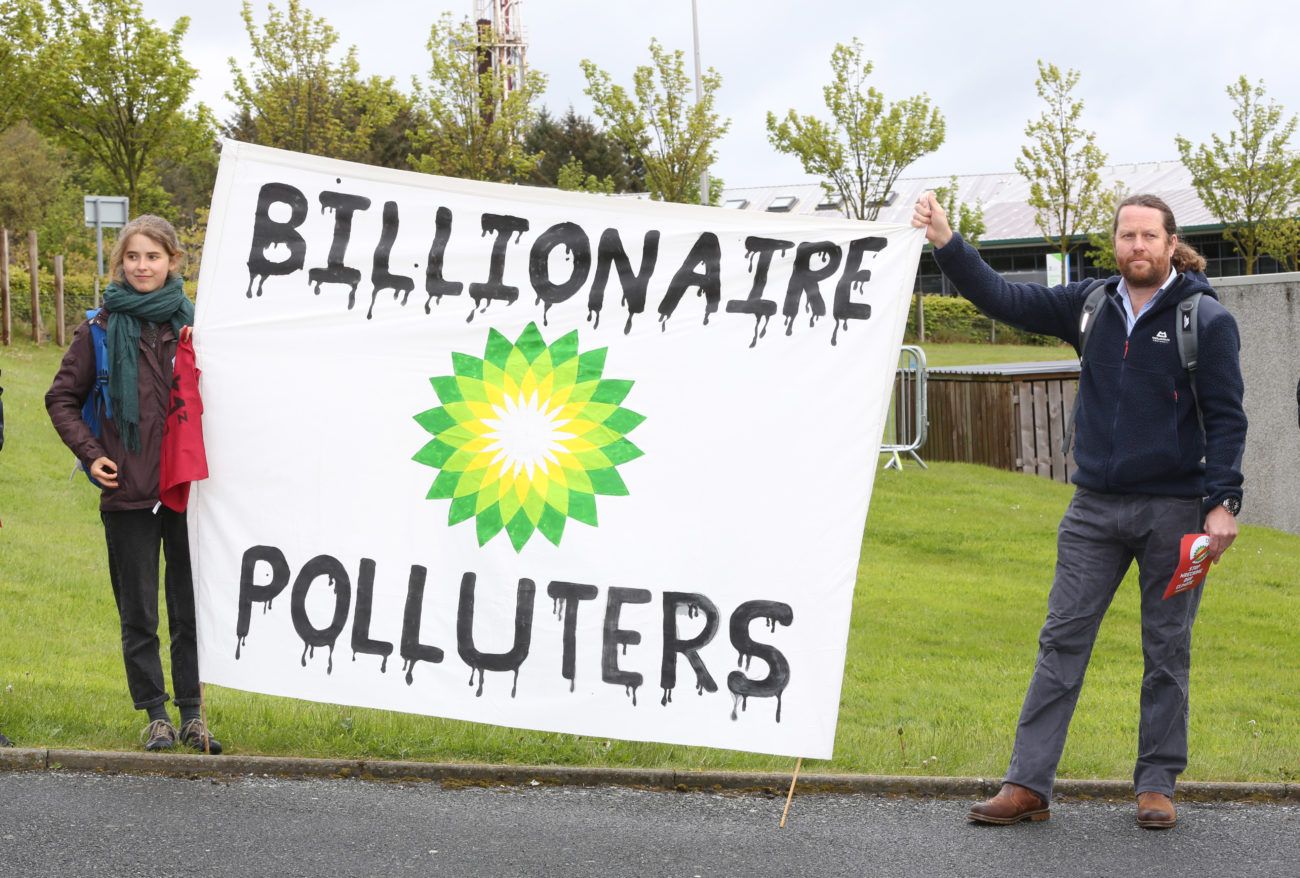
Politicians caught pleading for oil company profits
Reading the news this week, you could be forgiven for thinking the last four years hadn’t happened. The war in Iran and the closure of the Strait of Hormuz has sent oil prices skyrocketing, to the benefit only of oil and gas company bosses and their shareholders.
As Scottish households await the summer energy price cap rise with trepidation, fearing another £200 increase in their energy bills, we’re yet again confronted with the news that oil giant BP is walking away from this crisis with its profits having nearly doubled.
This story is so familiar now that it would be laughable, if it wasn’t such a damning indictment of how our energy system is run. Since the Russian invasion of Ukraine in 2022, leading energy firms have made £125 billion in profits on their UK operations.
1 in 3 families can’t afford to heat their homes
Year on year people across Scotland, where 1 in 3 households can’t afford to heat their homes, people are reading headlines that detail just how much money oil and gas giants are making off their misery. All the while, our bills have gotten more expensive, while our homes and the political will to change things have both dampened.
Each year, households are offered piecemeal policies that merely hold the dam back until the next time profiteering energy companies exploit fossil fuel crises to get even wealthier.
Whilst many will have understandably welcomed direct support from both the UK and Scottish Governments to support with increased bills, in effect this is yet another handout to astonishingly rich private energy companies. It doesn’t address the root cause of the problem, that it is our reliance on fossil fuels and our vulnerability to the international market price of gas, that keeps us trapped.
The primary mechanism through which these profits can be curtailed and redistributed to public services and communities in Scotland is through the Energy Profits Levy or ‘windfall tax.’ In the year of its introduction, then leader of the SNP Nicola Sturgeon backed calls to implement a windfall tax, recognising the immense financial gains companies were set to make out of war and violence elsewhere.
“Pleading” for oil giants to make profits
Yet since, the SNP, alongside Reform UK and the Scottish Conservatives, have been consistent in calling for the windfall tax to be scrapped. Instead of asking pertinent questions regarding how the revenue from the tax has been spent so far by the UK government, politicians have turned out in their droves to plead for the rights of oil and gas giants to make obscene profits. This week, we now have the numbers on just how grotesque that amount of money is.
Oil and gas industry bosses and their well-paid lobbyists have been largely successful, aiming to delay the transition in spite of the North Sea running out, so that for them, business continues as usual. And too many politicians in Scotland have fallen for their propaganda, hook, line, and sinker.
These companies want us to believe in the lie that when big companies drill for oil and make eyewatering profits, the rest of us benefit. This is demonstrably false. Research carried out by Robert Gordon University from 2020-2022, before the implementation of the windfall tax, revealed that young mothers in the North East of Scotland were being forced into increased levels of poverty, as companies pushed their food prices up.
In addition, their crocodile tears over the windfall tax obscures the fact that is these same industry bosses making workers redundant, while paying out billions to shareholders. Harbour Energy for example were quick to blame the windfall tax after they axed the jobs of hundreds of workers in May 2025, before they came under fire for paying out £1bn in dividends in the same period.
Public ownership of energy can deliver
People in Scotland have had enough of being held hostage by greedy energy companies whose sole motive is profit and profit alone. While oil giants scrap their investment commitments to renewables, cut jobs, and walk away richer from humanitarian crises, we can no longer consider them legitimate actors in Scotland’s energy future.
Any politician in Scotland who wants to be taken serious on matters of energy, industrial policy, and our future, needs to commit to increasing public ownership of Scotland’s energy system. It can only truly be our energy, if it is owned and controlled by the Scottish public.
This is the transformational change that workers and communities in Scotland want and deserve. Redistributing the wealth and power of greedy multinational energy companies and using it to fund the climate solutions that we know improve our lives permanently.
We need better and cheaper buses, so that everyone can get to where they need to go. We need homes that don’t waste energy, where our bills are cheaper and our homes are warmer. And we need workers in Scotland to benefit first from the wealth of renewables we have – confining profiteering oil and gas giants to the annals of history where they belong.
A version of this article was published in The National on 30/4/26.
This blog was published on Friday 8th May, after the Scottish Parliament election.