
150 million fewer bus passengers since 2007, despite climate concerns
Climate campaigners revealed that bus passenger numbers have fallen by 31% since 2009, when Scotland’s Climate Act was passed.
The First Minister last week announced franchising of buses where routes will be set by local authorities but would still be delivered by private companies. Campaigners say this move must be combined with support for public ownership if we are to reverse the long term downward trend and get more people using public transport.
Passenger journeys for local bus services have fallen from 484 million in 2008-2009 to 334 million in 2024-2025. This means there are approximately 410,000 fewer bus journeys made every day in Scotland than in 2009.
40 years of Thatcher’s bus legacy
Monday 26th October is exactly 40 years since Margaret Thatcher’s government began the privatisation and deregulation of buses in the UK. Campaigners said that four decades of bus privatisation has failed both passengers and the planet, forcing many people into car use or being left isolated. A quarter of households does not have access to a car, increasing to over half of the poorest households.
Climate pollution from transport has barely fallen since 1990, and it has been Scotland’s most polluting sector for over a decade. In the most recent climate statistics from 2024, pollution from transport increased and accounted for 28% of Scotland’s total climate emissions.
Calls are growing for buses to be brought back into public ownership, with campaigners arguing that the only way to reduce car dependency is to provide an alternative in quality, affordable, available and accessible public transport for everyone.
Rosie Holbrey lives in Aberdeen wants to drive less commented,
“I have to drive a lot because no buses serve my area. If they did and were affordable, I would use the bus a lot. I generally prefer public transport to driving – I could relax and read a book on my commute instead of sitting in traffic. Because I have to rely on driving I rarely can go out for drinks with friends, which affects my social life. I’d just love for more buses, and affordable buses, to give us alternative options to driving.”
Enormous subsidy to bus companies
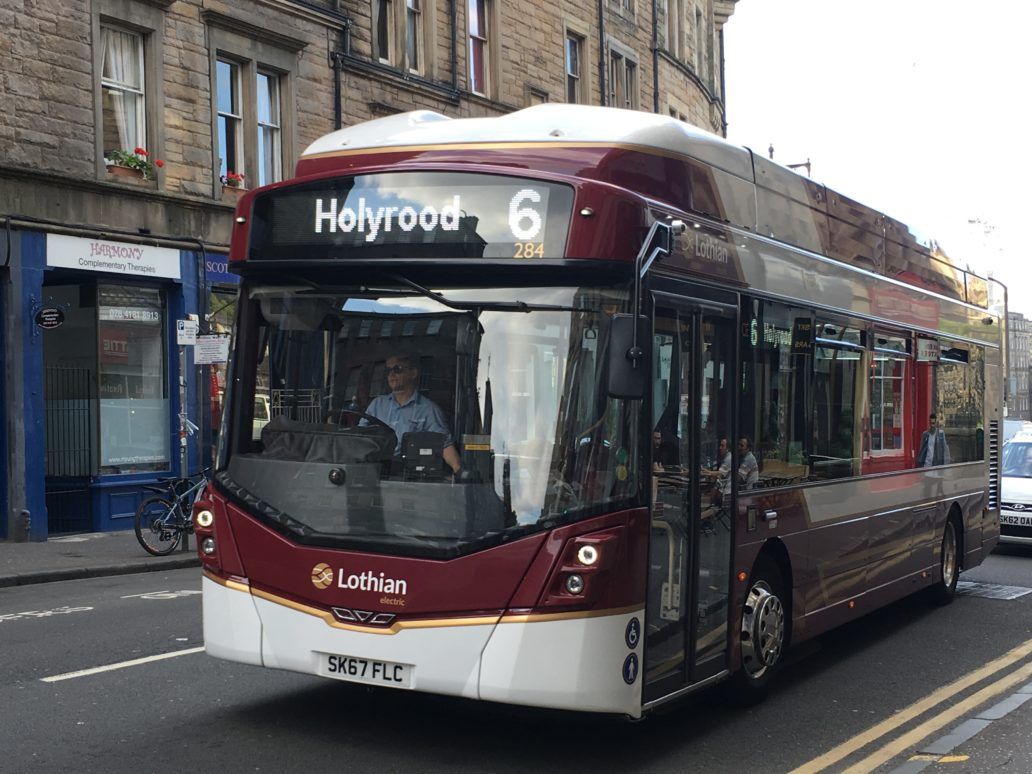
Despite enormous subsidies to the industry of £499million, private companies are failing to deliver public benefit. Meanwhile, publicly controlled Lothian buses is delivering increasing passenger numbers and was recently rated fourth in Time Out’s global ranking on public transport.
Friends of the Earth Scotland senior transport campaigner Emily Donnelly said,
“Decades of fare hikes, and routes cuts by private companies have literally driven away tens of millions of passenger journeys. It’s time to end Thatcher’s failed experiment of privatisation and put public transport back in public hands.”
“Franchising is a great move forward to set better routes, but the taxpayer will still be footing the very large bill. We need to address the question of ownership too. and t take private profit out of our lifeline public services. Public ownership alongside franchising is fundamental to building a system that works for our communities, not returns for distant corporations and shareholders.”
“Poor quality or unreliable buses aren’t just damaging to communities, they force people into car use which creates pollution impacting our health and the climate. Climate is supposedly a priority for the Scottish Government but all we have seen delivered so far is the sticking plaster of selective £2 bus fare caps, which does nothing if your route has already been cut.
“If you’re on the lowest incomes in Scotland, you likely do not have access to a car at all. Having a transport system built around cars makes life frustratingly difficult for no reason and is a real equalities issue. Improving bus services to meet all of our needs is a key way to allow more of us to access work, education, appointments. and see our loved ones. Public ownership of buses is a climate solution that would improve lives and better meet the needs of communities.”
Bus and coach travel stats 2024/25
https://www.transport.gov.scot/publication/scottish-transport-statistics-2025/chapter-2-bus-and-coach-travel/
Excel sheet – chapter 2 bus and coach travel https://www.transport.gov.scot/media/vhvnxolo/chapter-2-bus-and-coach-travel-excel.xls
In 2015, transport became Scotland’s single largest source of greenhouse gas emissions
https://spice-spotlight.scot/2020/02/11/transport-a-climate-emergency-budget/
Scottish Greenhouse Gas Statistics 2024
https://www.gov.scot/publications/scottish-greenhouse-gas-statistics-2024/pages/section-b-3–long-term-1990-to-2024-and-short-term-2023-to-2024-trends-by-category/
Public transport use in Edinburgh continues to grow, Jan 2026 https://www.lothianbuses.com/news/2026/01/public-transport-use-in-the-capital-continues-to-grow/
‘Access to car’ statistics from Transport Scotland
https://www.transport.gov.scot/publication/fairer-scotland-duty-assessment-achieving-car-use-reduction-in-scotland/summary-of-evidence/
The UK Transport Act 1985 privatized and deregulated local bus services across Great Britain starting on October 26, 1986
https://en.wikipedia.org/wiki/Transport_Act_1985