
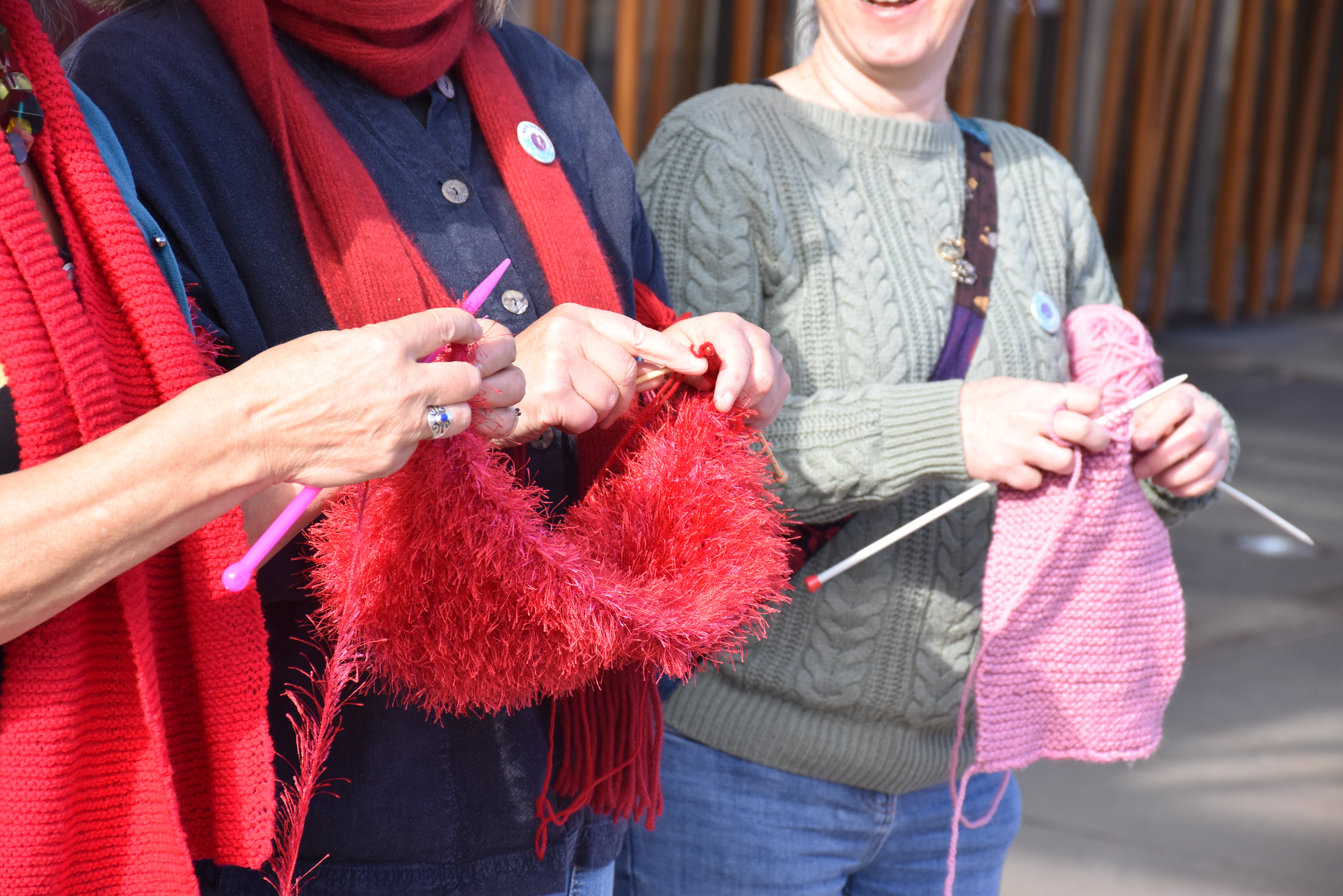
Why I’ve been knitting to stop a power station
This is a guest blog by SJ Winterbottom of the North Sea Knitters. A version of this piece appeared in the Sunday National on 1st March 2026
It was May 2024 when I first joined the North Sea Knitters, a Scotland-wide group campaigning for an end to new oil and gas projects. We are mostly retired though we’re often joined by young students too, equally alarmed at the prospect of imminent climate breakdown. We have time and bus passes.
Knitting has a traditional association with non-threatening protest and my first ‘knit-in’ was at SSE’s headquarters in Perth to protest their proposal for a brand new gas burning power station at Peterhead. It was the day SSE announced £2.4billion in annual profits, no doubt delighting the global investment banks, asset managers and shareholders for whom it is now run.
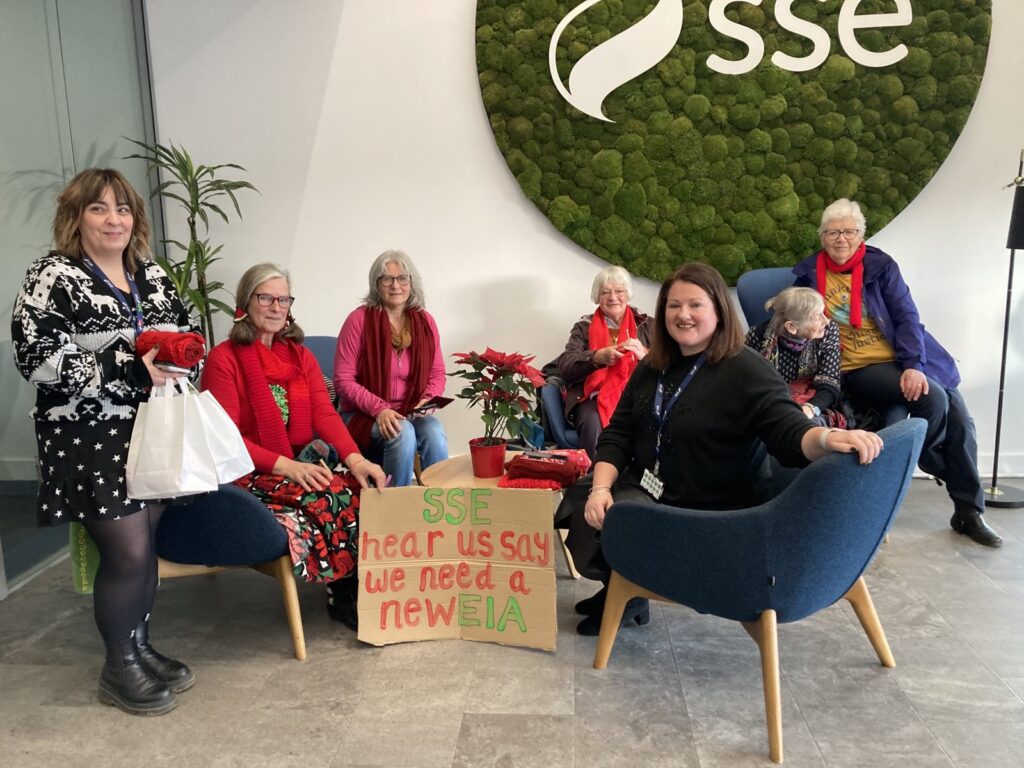
As we sat in SSE’s reception knitting, perplexed staff offered us cups of tea. Bosses from the company’s fossil fuel division politely answered our questions. They assured us that carbon capture technology worked and that the nearby Acorn Project, dreamed up by the oil and gas companies, would mop up most of the carbon pollution.
Carbon capture is ‘eye-wateringly expensive’
The problem is, that while carbon capture may seem like the magic bullet to all our carbon worries, it has yet to be proven at scale and is eye-wateringly expensive in comparison to tried and tested renewable alternatives. Never mind the fact it will lock UK consumers into dependence on expensive gas for a further 30 to 40 years.
SSE’s team seemed confident it was all feasible and tickety-boo, their calculations were correct and carbon capture was essential for ‘keeping the lights on’, a phrase they liked to use a lot.
I joined the knitters again later that year to disrupt SSE’s AGM and speak to the board directly. It’s not a tactic any of us like – you can see the jitters setting in beforehand as everyone practices their words. Though we challenged their AGM’s business as usual, we were courteous in voicing our concerns. We were met by angry and frankly shameful behaviour by both the board and shareholders. As a teary knitter pleaded for the sake of her grandchildren the chair sniggered and rolled his eyes. Shareholders swore and lunged at us so that security guards had to step in for our protection. It was a stark reminder of why essential public services should not be run to line the pockets those who happily put profit over people.
‘Nobody is indispensable’ to these huge companies
We’ve been back to SSE a few times since. Once after new research estimated the carbon pollution from the Peterhead power station could be five times worse than SSE had admitted in their Environmental Impact Assessment – they have since been forced to resubmit it to reflect the substantially higher levels of predicted emissions.
The most recent visit was a sweltering day last May when we showed up to challenge them for backtracking on their renewables commitments. The poor soul sent out to talk to us already looked defeated in the face of our concerns. Their department’s budget was being cut. They have families to feed and mortgages to pay. We get it. These companies are run by the bottom line and nobody is indispensable.
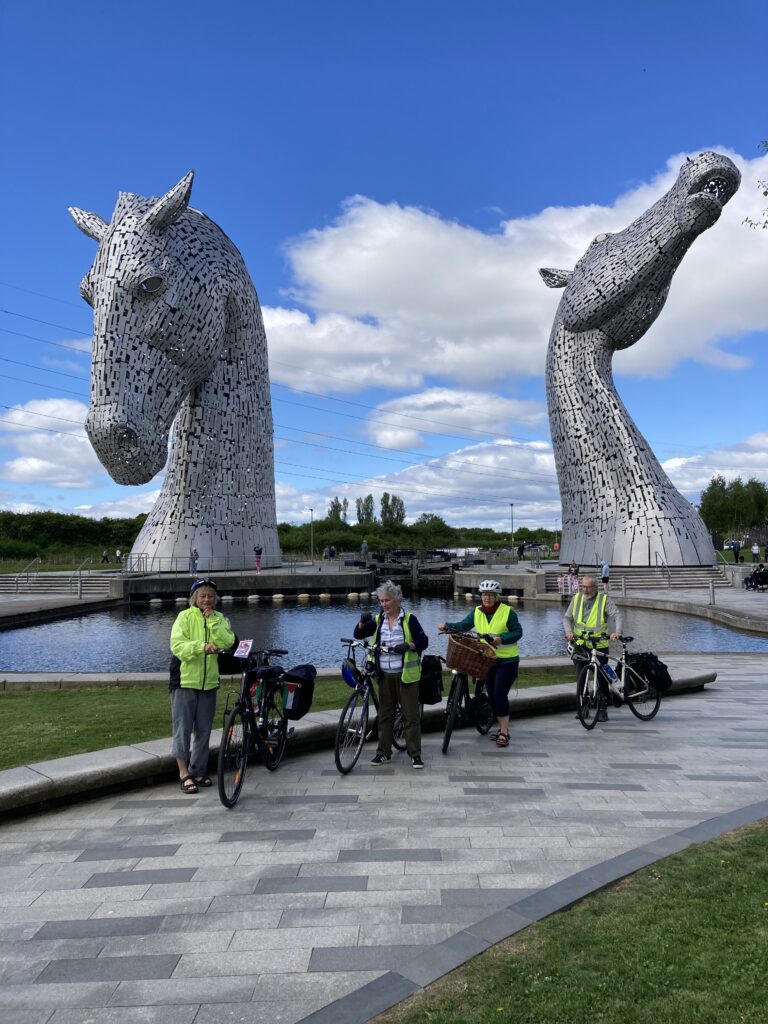
Last summer, two of our fitter knitters also ‘peddled the pipeline,’ by cycling from Falkirk to Peterhead to draw attention to the dangers of using the legacy gas network for transporting CO2 through some of Scotland most populated areas as part of the Acorn Project. We showed up outside the Labour party conference in Glasgow too, with ‘A Con’ leaflets to let politicians learn more about the reality of carbon capture rather than the fantasy they are being sold by lobbyists.
Four years of campaigning against new gas
It’s been four years since the Peterhead power station was first proposed and the actions of the knitters along with the multitude of other volunteers who have stood out in the cold leafleting, nagged their MPs and MSPs, collected signatures and waved placards, has resulted in significant delays for the project. Storegga, the major partner in Acorn has already pulled out and the integrity of the legacy gas pipeline has been called into serious question.
It’s clear that corporations like SSE are not run for public benefit – the rising rates of fuel poverty bear testament to that, a number that will continue to sky-rocket as long as we keep channeling our taxes and human resources into propping up the anachronistic fossil fuel industry. We hope this government comes to its senses and rejects the proposed power station. Imagine what such vast amounts of money could do instead to insulate our homes and power them with clean energy.
Protesting is exhausting work but the joy and camaraderie of the knitters is infectious and sustaining. It is not something we do lightly, but when the voices of dissent are locked out of the conversation and wealthy consortia have regular front door access to our politicians, what choice do we have?