
Why public ownership is the answer for Scotland’s buses, and our climate
We’ve been hearing a lot about bus fare caps lately. A key pledge in the SNP’s manifesto ahead of May’s elections was a roll out of the £2 single bus fare cap nationally – expanding beyond the places where a trial was already in place, like the Highlands and Islands.
Then in June, some backtracking perhaps – an announcement that the promised cap would come ‘in phases’ – starting with the Strathclyde region. Now in the last couple of weeks, Burnham’s early days pledge to cap bus fares throughout England from the start of next year risks leaving much of Scotland lumbered with the UK’s most expensive buses.
There’s no doubt that bringing the price of bus fares down will make a difference for people who are struggling in this cost-of-living crisis caused by corporate greed. Scotland’s bus network has been left in an alarming decline by the private bus companies, local authorities and politicians who haven’t had bus passengers’ best interests at heart for decades. This has resulted in an unequal picture across the country, with some areas providing a decent service and others spiralling into decay.
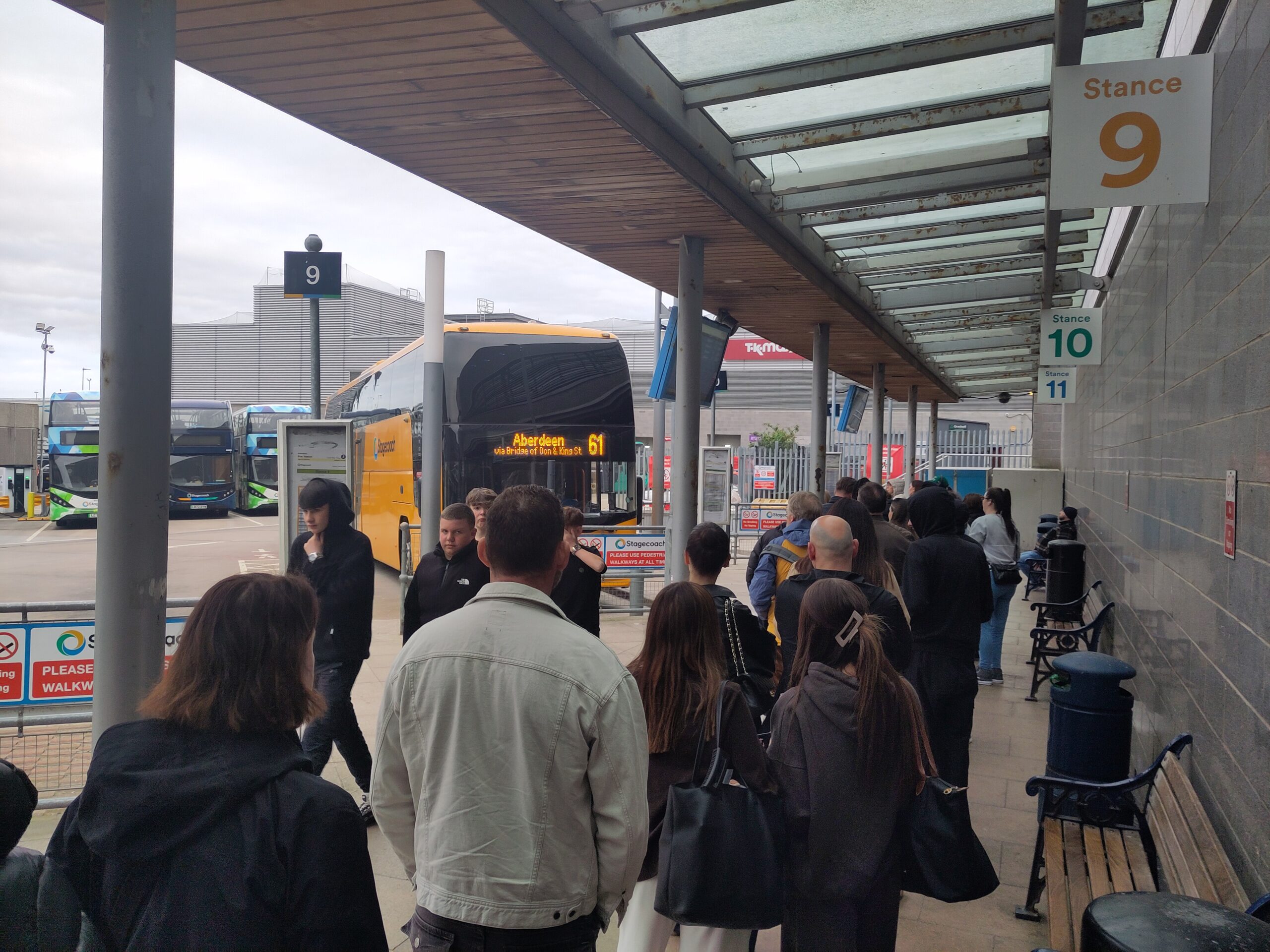
In the north east of Scotland, Transport Secretary Stephen Flynn’s stomping ground, bus services which cover the Buchan area charge £4 to travel a mere 3.8 miles between Boddam and Peterhead – working out at nearly £1 per mile. That’s an outrage which benefits nobody but the private bus companies serving the routes. But if the phased approach to the fare cap stands, communities in Aberdeenshire could be waiting years yet for any meaningful change, the losers in a postcode lottery of phased implementation.
Even if there is a change of tack in Scotland and fare caps are rolled out earlier than expected – we would still only be putting a sticking plaster solution over a nasty wound, and not remedying the equally pernicious problems with connectivity and reliability which plague Scotland’s bus users.
While capping fares reduces the cost for the customer, public funds pay the difference. Meanwhile, private bus companies continue to extract millions in profit – take billionaire brothers Sandy and James Easdale, owners of McGill’s Buses and fifth in Scotland on the Sunday Times Rich List this year. McGill’s have had no shortage of headlines in recent times – including for receiving nearly £30,000 in fines for service faults – like at least two of their buses catching fire, one of which was transporting school pupils.
Across Scotland, communities are struggling with bus services that are too infrequent, and don’t go where passengers need them to go. A fare cap won’t solve this. The only way to deliver genuinely affordable, accessible, reliable and sustainable public transport run for communities – not for self-serving commercial interests like McGill’s – is by bringing bus services into public ownership.
The publicly owned Lothian Buses in Edinburgh is frequently awarded for the quality of its service. They’re not alone in the UK either: cities like Cardiff and Nottingham have excellent council-owned services, and the world’s highest ranked integrated public transport networks, such as Paris and Zurich, are publicly owned and controlled.
It shouldn’t be controversial to say that the bus network should work for the people who rely on it – buses are a lifeline, especially in rural communities. And rural communities can particularly benefit from public ownership since it doesn’t require meeting any tests of “commercial viability”, and is easily scalable – the process could start now in the areas least well served by buses and be expanded as required.
In fact we have already seen this happen in Inverness, where the council bought out an existing bus company, and in Dumfries and Galloway, where the local authority stepped up to run services following Stagecoach’s sudden exit from the region.
It’s also a better deal for bus workers – public ownership would better protect their pay and terms and conditions from the insecurity that comes with the chopping and changing of ownership so common in a privately controlled system. Unite have strongly backed proposals recently announced by Transport for London to investigate setting up a new publicly owned bus company in the capital.
Finally, you might be asking – why is this a climate issue? Transport has remained Scotland’s largest source of climate pollution for over a decade. Politicians are talking up the potential for a bigger uptake of electric cars as a way to lower emissions, but there aren’t the raw materials (like lithium, copper, aluminium) available in the world for enough electric cars to be made for everyone. Regardless, cars are expensive to purchase and run – over half of people on the lowest incomes in Scotland already have no access to one.
At Friends of the Earth Scotland we know that public transport can improve lives for the better – it can fight poverty, improve congestion in our towns and cities and is a more efficient way to use the scarce natural resources that our planet provides.
Putting public transport into public hands is a no brainer – for people, communities, workers and the planet.
A version of this article first appeared in The National on 7/8/2026