
Impacts of wars overseas coming closer to home
In 1990, the crew aboard Voyager 1 took a photo of the Earth from space. The “Pale Blue Dot” was a major moment in the founding of the environmental movement, as people reckoned with the confronting fact that everyone who has ever lived and everything they have ever loved has been on this one, miraculous, interconnected and fragile planet.
As images arrived from Artemis 2 of the only home we’ve ever known over the last few weeks, we are reminded once again that people and the environment cannot be disconnected. It is our improbable life support.
The escalation of conflict in the Middle East is a blatant example of the disregard for, and violence inflicted on people and the environment within our current system. The devastating impact cannot be understated.
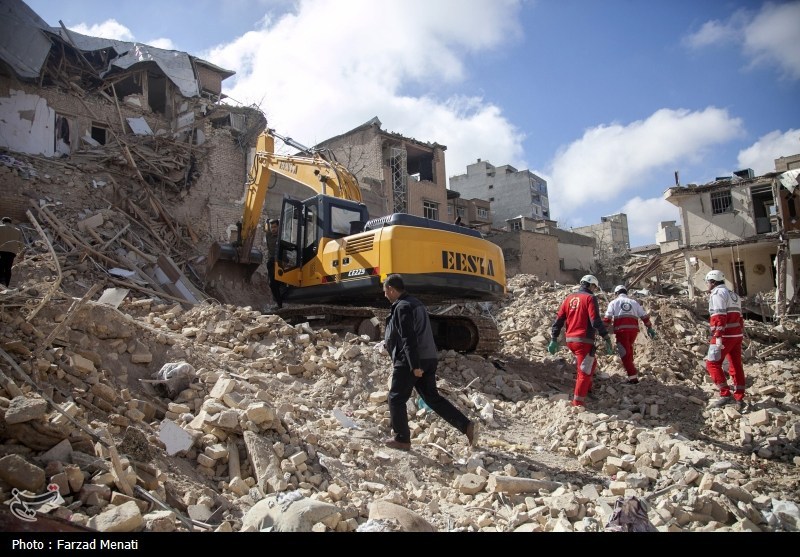
Over 3000 people have been killed in Iran by US and Israeli strikes and there has been widespread damage to energy and other public infrastructure. Over 1 million people in Lebanon have been displaced by Israeli attacks and threats, with 700 people killed in Gaza, since the so-called ceasefire in October 2025.
Ecocide as tool in the Palestinian genocide
Environmental destruction has long been a tool used by the Israeli military and government to undermine Palestinian survival. Since 2023 the scale of this has intensified catastrophically, leading to a breakdown of all the ecological systems that support life. Ecocide has become a tool to enact genocide.
Water, air, soil and ecosystems have been under attack. Destruction of sewage systems, desalination plants and water wells has led to contamination of almost all of groundwater in Gaza.
Farmland and neighbourhoods have been saturated with sewage, leading to outbreaks of infectious diseases. Large scale run off into marine areas has led to the collapse of ecosystems, making fishing unsafe and destroying livelihoods and food sources. Bombing, rubble and debris have contaminated the soil with chemicals such as lead, arsenic, and uranium, making land unsuitable for food production and eradicating biodiversity.
This is a complete assault on the environmental conditions necessary to sustain life. Israel must be held accountable for this destruction, as part of their campaign of terror against the Palestinian people.
Climate pollution from war further increases devastation
The environmental impact also goes further, as the carbon emissions from Israel’s bombardment of Gaza since 2023 are equivalent to 100 countries annual emissions. Similarly, just the first two weeks of the assault on Iran released 5 million tonnes of carbon dioxide into the atmosphere.
This will have massive consequences as this pollution leads to more extreme and erratic weather across the world. It reduces the amount of time we have globally to transition away from fossil fuels, to ensure that planetary life support system stays intact.
Yet, instead of accelerating the transition, fossil fuel companies are using these moments of crisis to push for further extraction. Dana Petroleum, a fossil fuel company headquartered in Aberdeen, was granted gas exploration licenses in Palestinian waters by the Israeli Government in October 2023. Their partners ENI have since pulled out of the toxic deal, but Dana is pushing ahead, accelerating the climate crisis and pillaging Palestinian resources.
War and your energy bills
Here in Scotland, the US and Israel’s war on Iran have sent fuel prices skyrocketing. It threatens to do the same to our energy bills despite one in three of households in Scotland already unable to afford to heat their homes.
While this is devastating for Scottish families, others are benefitting. For the last month the 100 biggest fossil fuel companies have earned $30 million an hour in excess profits from these price rises. Calls to subsidise energy bills, while necessary, currently means that public money will be funnelled into very deep private pockets.
Fossil fuel lobbyists are capitalising on this crisis of fossil fuels, inequality and war by insisting we should do more of the same. Cynical calls for new North Sea drilling will only further lock us into volatile oil and gas markets in an increasingly unstable world.
We need to respond with a different plan. It’s essential that we react to this moment in a way that prioritises life and wellbeing, not fossil fuel profit margins.
We can bring down energy bills, increase our resilience to future instability and stop wasting public money by investing in publicly owned renewable energy, at a national, local and community level. By rolling out mass insulation of leaky homes, starting with the people experiencing the harshest impacts of fuel poverty. By taking buses under public ownership and delivering services that meet community needs to reduce the impact of unpredictable fuel prices.
These solutions should be immediate priorities for the new Scottish Parliament, to reduce our climate impact and meaningfully support communities for the long term.
On this interconnected planet we must also stand firm in solidarity with those around the world being subject to genocide, ecocide and colonial violence, in Palestine, Lebanon, Iran and elsewhere.
We shouldn’t have to go to the moon to recognise that violence and destruction is not “over there” but part of the same system that is harming us all.
A version of this article appeared in The National on 18/4/26